

How to Avoid Common Flutter App Development Mistakes for Better Mobile App Performance
Building high-quality Flutter apps is faster and simpler than ever, but even the most experienced Flutter developers can fall into avoidable traps.
This article explores the most frequent mistakes in Flutter app development services, explains how they affect app quality, and offers proven strategies to ensure your next Flutter project runs smoothly.
Whether you’re part of a mobile app development company or developing a mobile app independently, these insights will help you reduce development time and deliver robust, scalable cross-platform apps.
Why Are Some Flutter Apps Underperforming?
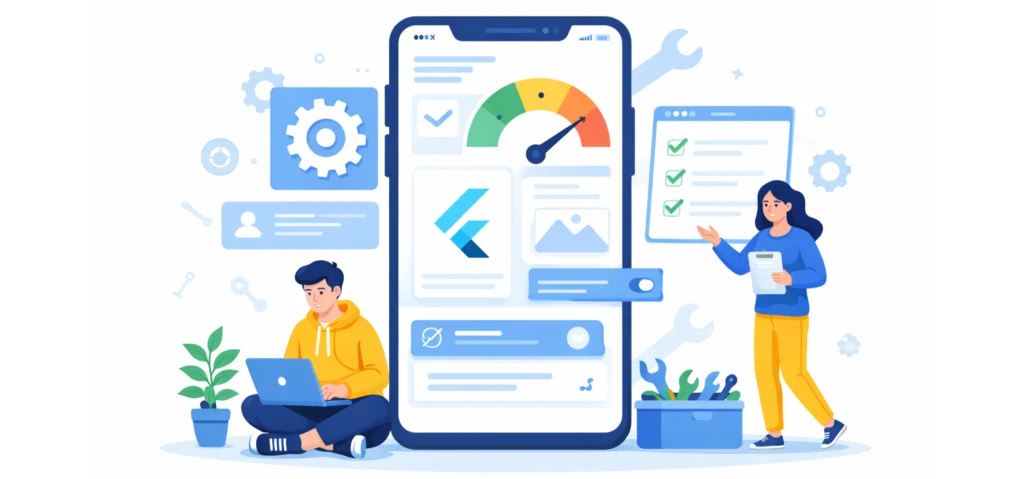
When developers misuse widgets or trigger unnecessary rebuilds, Flutter apps can suffer from jank, dropped frames, excessive CPU usage, and increased memory overhead that degrades overall user experience.
Understanding Flutter’s rendering pipeline, widget lifecycle, and state management enables developers to structure widgets efficiently, minimise rebuilds, and significantly improve responsiveness and visual smoothness.
A trusted Flutter app development company leverages profiling tools like Flutter DevTools to monitor rebuilds, analyse frame rendering, and optimise performance, ensuring scalable, stable, and high-performing applications.
Is Improper State Management Slowing Down Your App?
Poor state management is the most common mistake in Flutter mobile app development because it leads to excessive widget rebuilds, tangled logic, difficult debugging, and poor scalability as features grow.
Each app development process stage has its own best solution:
- Provider is best at managing simple, shared state in small to medium apps where rapid development and minimal complexity are priorities.
- GetX is best at accelerating development speed for prototypes or smaller projects by providing a concise, all-in-one toolset that minimises boilerplate code.
- Riverpod is best at handling scalable, testable state management with clear dependency control for growing apps and long-term maintainability.
- BLoC is best at managing complex business logic through predictable event-driven state flows in large, enterprise-level applications.
Expert Flutter app developers implement consistent state management and architectural patterns to reduce development complexity, minimise bugs, improve code readability, and ensure long-term scalability across evolving application features.
Neglecting Responsive Design in Flutter Applications
Ignoring responsive layouts causes UI elements to appear cramped, misaligned, or unreadable across different screen sizes, leading to poor usability, inconsistent experiences, and reduced user satisfaction on both iOS and Android devices.
Some common examples are:
- LayoutBuilder: Adapts layouts based on available screen space.
- MediaQuery: Adjusts UI using device size and orientation.
- Device previews: Test responsiveness across multiple devices.
Development companies ensure responsive design in both native and cross-platform app development by following adaptive layout principles, testing across multiple devices, and using responsive frameworks and preview tools to maintain consistent user experiences.
How Dependency Overload Can Break Your Flutter Application
Overusing third-party services and packages often bloats builds, increases app size, slows startup time, and introduces dependency conflicts, making updates riskier and performance harder to maintain over time.
To keep development and maintenance manageable, rely only on well-supported APIs and trusted services, and regularly review dependencies to remove redundant packages and reduce complexity.
Leading Flutter app development company teams follow best practices like dependency audits, version pinning, modular architecture, and automated testing to ensure stable releases and long-term application reliability.
Ignoring Platform-Specific Behaviours in Flutter Mobile App Development
Testing on both Android and iOS is critical to mimic native experiences because platform-specific performance, navigation patterns, and UI behaviors can differ, and issues often appear only on real devices.
Native app development conventions—like back gestures, scrolling physics, animations, and system UI styling—vary between platforms, and mismatches can feel “off,” reducing user trust and perceived quality.
To keep Flutter consistent across cross-platform mobile apps, align UI to platform expectations, validate gestures and transitions on-device, and fix platform-specific edge cases early through regular testing.
What Happens When You Don’t Optimise App Assets and Images?
Large image files and unnecessary fonts increase load times by inflating app size, slowing downloads, consuming memory, and delaying first render—often causing stutters when assets decode during scrolling or screen transitions.
Flutter development services use built-in tools like DevTools, asset bundling analysis, and image compression pipelines to shrink resources, lazy-load where appropriate, and keep runtime decoding efficient.
Flutter solutions can automatically optimise assets through build-time processing—such as tree-shaking unused font glyphs and compressing bundled resources—so releases stay lightweight and fast across devices.
Overlooking Testing and Quality Assurance in Flutter Projects
Testing ensures a reliable Flutter app development process by catching issues early, validating features continuously, and maintaining performance and stability across iterative development cycles and frequent updates.
Flutter application development relies on unit tests for business logic, widget tests for UI behaviour, and integration tests to verify complete user flows across screens and services.
Reliable Flutter development companies integrate automated testing pipelines into CI/CD workflows, ensuring consistent quality, faster releases, and long-term app stability even after post-launch enhancements.
Poor Integration with APIs and Backend Systems
Errors often occur when developers don’t properly handle systems and services integration, leading to unstable network flows, unhandled exceptions, inconsistent data states, and poor user experiences during timeouts or partial failures.
Structured API calls with clear request/response models, centralised logging, and consistent error handling improve application development by making failures predictable, easier to debug, and safer to recover from.
Flutter developers ensure backend resilience by using retry logic with backoff, timeouts, and circuit-breaker patterns, backed by clean architecture that separates networking, domain logic, and UI state.
Not Planning for Scalability in Your Flutter Project
A development team should plan for future growth by designing clear state management, reusable components, and extendable data models, so new features don’t require risky rewrites or slow development.
Scalable structures built by top Flutter development company teams keep projects maintainable by enforcing consistent architecture, clean boundaries, and shared conventions that help teams ship faster as complexity increases.
Using modular architecture keeps your app flexible during updates by isolating features into independent modules, reducing code coupling, and allowing changes without breaking unrelated screens or core flows.
Choosing the Wrong Flutter App Development Company
Selecting the right Flutter partner shapes the entire development journey, influencing architecture decisions, performance quality, scalability, and long-term maintainability from planning through post-launch support.
When evaluating a trusted Flutter development partner, review proven Flutter success stories, technical depth in state management and testing, platform expertise, and the ability to scale teams as your product grows.
Partnering with a leading Flutter app development company in India or a mobile app development company in the USA offers global reach, cost efficiency, and access to experienced teams delivering high-quality Flutter solutions.
FAQ Section
1. What is the typical Flutter development process like?
The Flutter development process usually includes discovery, UI/UX design, Flutter app development, testing, deployment, and ongoing optimisation using professional Flutter app development services.
2. How do I hire Flutter developers for my mobile app?
You can hire Flutter developers by evaluating their experience with Flutter apps, past projects, technical skills, and their ability to deliver end-to-end Flutter app development services.
3. What makes a top Flutter development company stand out?
A top Flutter development company stands out through proven Flutter expertise, strong architecture practices, reliable testing, and the ability to deliver scalable, high-quality Flutter apps.
4. How can one ensure a smooth cross-platform app development experience?
A smooth cross-platform app development experience is ensured by following best Flutter practices, maintaining consistent UI behaviour, and partnering with Flutter app development services that prioritise performance and stability.
Key Takeaways: Optimise Flutter App Development Services
The most important factors for successful Flutter app development are efficient state management, responsive design, thorough testing, and choosing the right Flutter app development company with proven expertise supported by end‑to‑end application development services.
When managed properly, Flutter is highly efficient, enabling teams to build high-quality, scalable apps faster and more cost-effectively while confidently bringing your app idea to life through specialised mobile app development services.
By partnering with a skilled Flutter app development company like Red Ant Technology, you benefit from faster time-to-market, reduced development costs, and scalable solutions tailored to your business needs, backed by expert app developers capabilities.
Interested in harnessing the power of Flutter the right way? Contact Red Ant Technology today to explore how our expertise as a leading Flutter app development company and our full suite of mobile app development services and application development services can turn your app idea into reality not just faster but also effectively.