

Why Enterprise Should Be Cautious About Vibe Coding?
The rise of vibe coding has raised expectations around how quickly applications can be built. Promises of instant output and reduced effort make speed feel more achievable than ever, especially when timelines are tight and resources are limited.
As a result, businesses are leaning toward more shortcut-driven development approaches. These approaches are often positioned as a practical working method for moving fast and delivering results.
However, the issue is not the development speed itself. The real problem is what gets sacrificed during the software development process.
What is Vibe Coding?
Vibe coding is a prompt-driven way of building software. Instead of writing code line by line, developers or non-technical users describe what they want in natural language.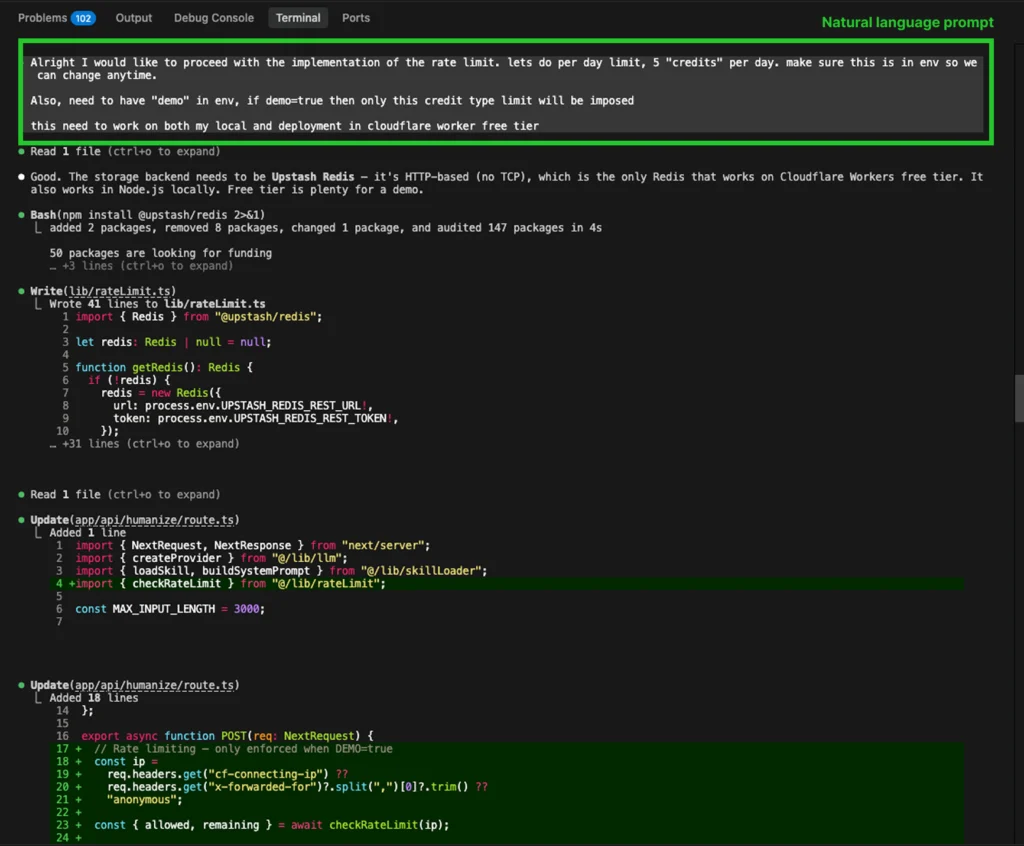
Based on these descriptions, LLMs can generate the application’s logic, interface, and workflows automatically.
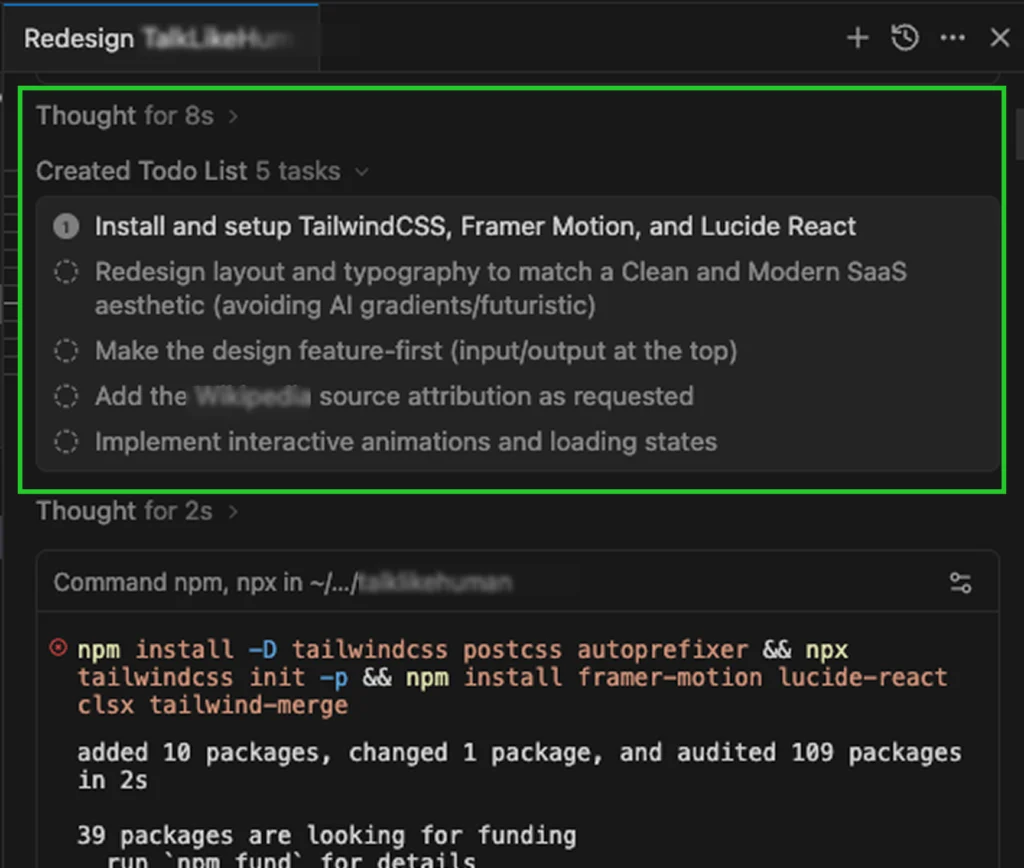
The focus is on quickly turning ideas into working software, rather than manually designing and coding every part of the system.
Vibe Coding vs AI-Assisted Coding
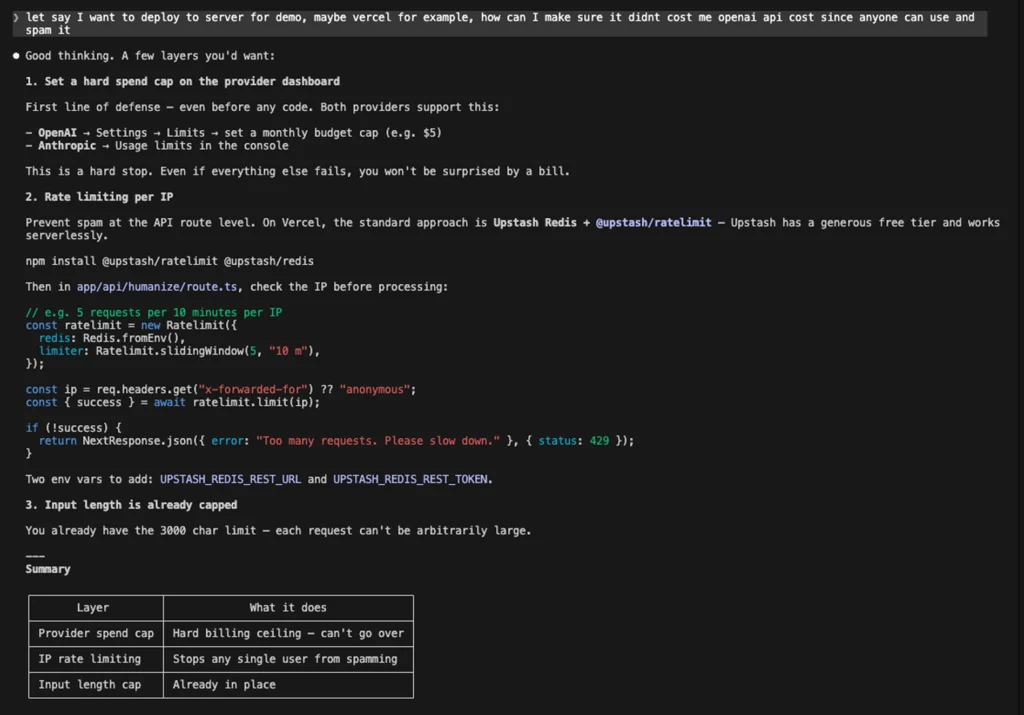
Vibe coding is very different from AI-assisted coding. In simpler terms, vibe coding means letting AI decide how a system is built based on your prompts and ideas.
AI-assisted coding in an Integrated Development Environment (IDE) helps developers write code faster while they still control the structure and design of the system.
| Aspects | Vibe Coding | AI Assistant In IDE |
|---|---|---|
| Who controls architecture | AI | Human developer |
| Customisation | Limited | High |
| Long-term cost risk | Low upfront, higher risk in long-term | Higher upfront, lower long-term risk |
| Suitability for enterprise use | Low to medium | Medium to high |
While they may look similar, it is crucial not to confuse the use of vibe coding and an AI-assistant in an IDE for software development.
Why is vibe coding so appealing for enterprises?
Vibe coding is popular for a simple reason: it feels fast. Teams can turn ideas into working demos in a very short time, which is especially attractive when deadlines are tight or when there is pressure to show progress quickly. These are often seen as some of the main benefits of using vibe coding.
There is also a strong perception of lower cost. By relying more on AI-driven development, businesses may feel they can move forward without heavy involvement from senior engineers, at least in the early stages.
This makes vibe coding appealing not only for enterprises under time pressure, but also for non-programmers who want to build something functional without deep technical knowledge.
For many teams, the biggest appeal is simply that the result works. When an application runs and meets basic needs, it is easy to focus on the advantages and ask, “It works, so why not move ahead with it?”
Though these benefits may not be a practical use case all the time.
Where and how does vibe coding work?
Vibe coding can be a good fit when the risks are clearly limited and the expectations are well understood. It works best in scenarios where speed matters more than long-term complexity.
Common examples include prototypes and proofs of concept, where the goal is to test an idea rather than build a production-ready system. It can also be useful for internal tools with a small number of users, where security and scalability requirements are lower.
| Use cases | Why vibe coding fits |
|---|---|
| Prototypes and proof-of-concepts | The goal is to test ideas quickly, not to build protection-ready systems. |
| Internal tools with limited users | Fewer users and lower risk make speed more important than long-term scalability. |
| Experiments and trials | Teams can explore new ideas without committing to a full system design upfront. |
In general, vibe coding works best for small-scale projects, where any issues that arise can be contained without affecting critical business operations.
The risks of vibe coding for Enterprises
While vibe coding can be useful, it also comes with limitations. Many of the problems with vibe coding do not appear immediately. Instead, they surface over time as systems grow, usage increases, and requirements change.
Understanding these risks is essential when evaluating vibe coding for enterprise adoption:
Security and compliance risks
One of the biggest dangers of vibe coding is unclear data handling. When logic is generated automatically, it can be difficult to fully understand how data is processed, stored, or exposed.
Vibe coding may create potential security risks for organisations that handle sensitive or regulated information.
Since there will be no clear audit trail. Vibe coders may struggle to explain how certain decisions were made inside the system, which becomes a problem during security reviews or compliance checks. Limited control over generated logic can further increase the risk of vulnerabilities going unnoticed.
Maintainability and ownership
Over time, teams may find themselves managing code that no one fully understands, including the people who originally built it. When logic is driven by prompts rather than clear design decisions, knowledge can become fragmented or lost.
There is also the issue of ownership. Businesses may become dependent on specific platforms, tools, or even prompt structures. This makes it harder to change vendors, onboard new teams, or take full control of the system later on. These are common vibe coding pitfalls that only appear after the system has been in use for some time.
This lack of clarity often leads to technical debt, where short-term convenience creates long-term complexity.
Scalability and integration challenges
Vibe coding can work well for small, contained projects, but its limitations become clearer as systems grow. Enterprises often need to integrate with ERP systems, CRM platforms, or legacy infrastructure. Automatically generated workflows may not handle these integrations reliably.
As usage increases, workflows that worked well at low volume can become fragile. Performance issues, unexpected failures, or data inconsistencies may start to appear. These problems are not always easy to fix without significant rework.
Long-term cost impact
One of the most overlooked risks of vibe coding is cost over time. While the upfront effort may be lower, the long-term cost can be much higher. Systems that were meant to be temporary often become permanent, and quick solutions may require expensive rewrites later.
For enterprises, this is often the biggest problem with vibe coding. The initial speed creates expectations that are difficult to sustain when the system becomes more critical to daily operations.
Why Enterprises must evaluate vibe coding risks before adoption?
Software is rarely just a one-time project, and limitations of vibe coding don’t show up at the beginning. As usage grows and systems become critical, these limitations can risk your business.
Systems need to be maintained, secured, improved, and sometimes handed over to new teams or vendors. This is why enterprises need to evaluate vibe coding risks before adoption.
Doing so helps them decide whether a project should be handled by an experienced software vendor or an in-house development team that can take full ownership of the system. For most projects, especially large-scale ones that need to be broken down into phases, accountability, maintainability, and long-term support matter just as much as speed.
This is why enterprises should often work with an experienced software development company, like Red Ant Technology. Our development team always prioritises clear architecture, ownership, and long-term maintainability over short-term speed.
What enterprises should look for in a vendor?
When evaluating vendors for software development, enterprises should look beyond how fast a solution can be delivered. The more important question is whether the system can be supported, maintained, and trusted over time.
Instead of focusing on tools or promises, enterprises should ask practical questions:
- Does the vendor clearly explain how the system is built, or do they only focus on outcomes? A clear explanation shows whether there is real understanding behind the solution.
- How does the vendor handle security and risk reviews? This includes how data is handled, how changes are reviewed, and how potential issues are identified and addressed.
- What happens if the underlying platform or AI tools change? Enterprises should understand how adaptable the system is and whether the vendor has a plan for future changes.
Asking these and related questions about software development helps enterprises choose software development partners who can support long-term business needs, not just short-term delivery.
FAQ Section
1. What is vibe coding?
Vibe coding uses natural language prompts to let AI generate code, logic, interfaces, and workflows, allowing users to build software conversationally without line-by-line writing.
2. Is vibe coding suitable for enterprises?
Vibe coding suits prototype or internal tools but poses risks for enterprises due to security gaps, technical debt, and scalability limits in production systems.
3. What are the main risks of vibe coding?
Key risks include unclear data handling, lack of audit trails, opaque code ownership, integration failures with legacy systems, and high long-term rewrite costs.
4. Is vibe coding the future of programming?
Vibe coding accelerates prototyping but complements, not replaces, structured methods; agentic AI may evolve it, yet human oversight remains essential for enterprise reliability.
Conclusion
Vibe coding is useful when applied in the right context and with clear limits. The problem arises when it is treated as a long-term strategy rather than a tool for specific situations.
For enterprises, software development decisions go beyond getting something to work quickly. Systems need clear ownership, strong security practices, and the ability to evolve. These requirements cannot be replaced by speed alone.
This is why enterprises should demand clarity around how systems are built, who owns them, and how they will be supported in the future. When these questions are answered upfront, businesses are better positioned to make sustainable technology decisions.
If you’re planning a long-term system and want clarity on the right development approach, feel free to reach out to our software development team.