

How to Estimate App Development Cost in Malaysia
Considering building an iOS app in Malaysia? Custom iOS applications typically cost between RM50,000 and RM300,000, depending on their complexity, features, and technical requirements.
Unsure how to budget for your business app in Kuala Lumpur or across Malaysia? For SMEs, determining a realistic iOS app development cost estimate involves evaluating key factors such as app type, user interface design, backend integration, and platform compatibility.
Understanding the full scope of a mobile app development cost estimate in Malaysia is essential before engaging a development partner. At Red Ant Technology, a trusted app development company Malaysia, we make accurate quoting straightforward by guiding clients through a structured, transparent estimation process.
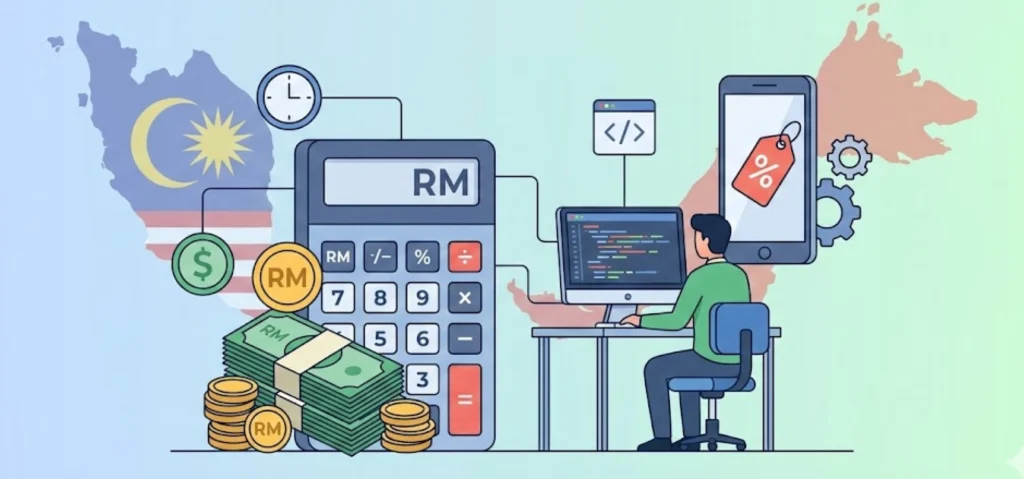
What is the Cost of iOS App Development?
In Malaysia, iOS app development typically costs between RM50,000 and RM300,000. Prices depend on app complexity, design needs, platform choice, and backend integration. Businesses should also budget for testing, updates, and App Store fees.
Understanding what drives the iOS app development cost in Malaysia can help SMEs budget more accurately and avoid unexpected expenses. Below is a detailed breakdown of the main cost components:
1. App Complexity
The overall functionality of your app plays a major role in determining cost:
- Simple apps (RM50,000 – RM100,000): Basic tools or content-based apps with minimal features.
- Medium complexity (RM100,000 – RM200,000): Apps with user logins, database integration, or booking systems.
- Complex apps (RM200,000+): Feature-rich applications incorporating technologies such as Augmented Reality (AR), Artificial Intelligence (AI), or advanced geolocation.
2. Team Expertise
Who builds your app matters just as much as what it does. In Malaysia, senior Swift developers typically charge between RM150 and RM300 per hour, depending on their experience and the project’s technical scope.
Hiring more experienced developers may increase upfront costs, but it often results in cleaner code, better long-term scalability, and faster project delivery. If your app involves advanced integrations or niche technologies, allocating a budget for a skilled team is a strategic decision.
3. Design and UI/UX
Design is not just about aesthetics, it influences user retention, usability, and App Store success. Custom UI/UX design that adheres to Apple’s Human Interface Guidelines (HIG) can add between 20% and 30% to your overall development budget.
This includes high-fidelity wireframes, intuitive navigation, responsive layouts for multiple device sizes, and accessibility compliance. Although this represents a significant investment, it pays off in the form of a smoother user experience and stronger brand presence.
4. Backend Development and Integration
Even the most elegant frontend requires a reliable backend. Apps that rely on features like Firebase integration, Apple Pay, custom APIs, or real-time data syncing will require a more robust server-side infrastructure.
These technical components often contribute an additional 20% to 25% to the total cost, especially when the app involves secure payments, user-generated content, or dynamic data. Backend services also require setup, testing, and ongoing monitoring to ensure performance and scalability.
5. Testing, Launch, and Post-Launch Maintenance
Quality assurance is critical to ensuring your app performs well across all supported iOS devices. The process includes bug testing, usability checks, and performance optimization prior to App Store submission.
Post-launch, it’s essential to plan for maintenance, including compatibility updates for new iOS versions, user feedback improvements, and minor bug fixes. These activities usually account for 15% to 20% of your total project cost and should be factored into your initial budget planning.
Cost Estimation Formula

When budgeting for a custom app, it’s important to understand how costs are distributed across different development phases. Each stage contributes to the final price based on time, complexity, and the expertise required. Below is a simplified breakdown of what to expect:
- Discovery & planning involves defining app features, user goals, and technical requirements.
- UI/UX design covers wireframes, screen flows, and building a user-friendly interface.
- Frontend development implements the visual elements and core functionalities.
- Backend & testing includes databases, APIs, integrations (e.g., Apple Pay), and QA testing.
- Deployment & support prepares the app for App Store launch and handles post-launch fixes.
Here’s a cost estimate table based on common project sizes and hourly rates in Malaysia:
| Factor | Hours Estimate | Rate (RM/hr) | Subtotal |
|---|---|---|---|
| Discovery & Planning | 40 – 80 | RM150 | RM6,000 – RM12,000 |
| UI/UX Design | 80 – 160 | RM200 | RM16,000 – RM32,000 |
| Frontend Development | 200 – 500 | RM250 | RM50,000 – RM125,000 |
| Backend & Testing | 150 – 400 | RM250 | RM37,500 – RM100,000 |
| Deployment & Support | 50 – 100 | RM200 | RM10,000 – RM20,000 |
| Total Estimated Range | - | - | RM120,000 – RM290,000 |
This estimation formula offers SMEs a transparent view of development costs based on typical project phases and rates in Malaysia. Actual pricing may vary depending on the complexity, team structure, and app requirements.
Step-by-Step Estimation Guide

Estimating the cost of an iOS app requires a clear and structured process. For SMEs, this guide outlines how to plan a realistic budget based on scope, platform, and development variables.
1. Define the Project Scope
Begin by identifying the app’s essential features. List what your users must be able to do, such as account registration, in-app payments, push notifications, or live chat. For instance, a business app similar to the Panasonic Malaysia app might include product browsing, customer support integration, and loyalty features. A well-defined scope allows developers to provide accurate and itemised quotations.
2. Choose the Right Platform
If your target audience is primarily on iPhones, developing for iOS only can reduce overall costs. iOS-only apps are typically around 30 to 40 percent cheaper than cross-platform solutions, which require additional testing and design adjustments for Android compatibility.
As such, it’s crucial to work with a company skilled in both iOS and Android app development in Malaysia if your target audience is on both platforms.
3. Request Multiple Quotes
With a clear scope in hand, approach at least three reputable companies providing custom app and web application development in Malaysia. Request detailed proposals that include hourly rates and feature breakdowns. Comparing providers like Red Ant Technology helps assess pricing, technical expertise and service quality.
4. Add a Contingency Buffer
App development in Malaysia often evolves during the process. Allocate an additional 15 to 20 percent of your total budget for changes, enhancements, or compatibility updates following new iOS releases. This buffer also helps cover minor feature requests that emerge after user testing.
5. Consider the Timeline Impact
Most software development in Malaysia takes between three to six months to complete from initial planning to App Store launch. If your project requires a faster turnaround, costs may increase by up to 30 percent to account for additional developer resources or overtime.
6. Account for Hidden and Ongoing Costs
Beyond development, factor in recurring and indirect costs. Apple’s Developer Program fee is approximately RM499 per year. You should also budget for app store optimisation, user acquisition, customer support setup, and basic marketing to promote the app post-launch.
Red Ant Portfolio Cost Examples
Red Ant Technology’s past work demonstrates how smart planning and modular execution impact both cost and ROI for enterprise-grade iOS apps in Malaysia. Below are three key examples that reflect different levels of complexity, investment, and strategic design.
1. Panasonic Malaysia Air Conditioner App
This medium-complexity app was developed to support Panasonic’s air conditioning product line across the customer lifecycle. It provides users with intuitive product controls, pre-purchase education, and post-purchase support.
The streamlined functionality ensured that the app remained cost-efficient without sacrificing performance. It is ideal for large enterprises managing broad product lines.
2. Prudential PRUprestige
PRUprestige is a high-end customer engagement app designed for Prudential’s premium clientele. It features secure logins, personalised user journeys, and exclusive digital concierge services. Due to its heightened security requirements and fully customised experience, this app represents a premium-level investment, tailored to deliver long-term customer value and brand loyalty.
3. My Panasonic
Built as a multi-platform app with a native iOS core, My Panasonic offers features such as product registration, loyalty rewards, and service booking. It was also optimised for Huawei’s platform.
By focusing development efforts on iOS first, the project maintained a cost-effective structure while expanding reach across additional platforms. This strategic sequencing helped manage budget while maximising user accessibility.
Across all three examples, a key takeaway from Red Ant’s mobile app development services is the use of modular design. By breaking features into clearly scoped modules, clients have consistently avoided 15 to 20 percent in potential budget overruns.
FAQ & Cost Saving Tips
What is the average iOS app development cost in Kuala Lumpur?
For most businesses in Kuala Lumpur, the average cost to develop an iOS app ranges between RM80,000 and RM250,000. This depends on the app’s complexity, required features, team experience, and whether the app includes backend infrastructure or third-party integrations.
Is it cheaper to build an iOS-only app or a cross-platform app?
An iOS-only app is usually 30 to 40 percent cheaper than a cross-platform app if your audience primarily uses iPhones. Cross-platform development can be more cost-effective when targeting both iOS and Android users simultaneously.
How can I reduce iOS app development costs in Malaysia?
To lower your iOS app development costs without compromising quality, consider the following:
- Start with an MVP (Minimum Viable Product): Focus on building only the core features needed to launch and validate your app. You can always scale later based on user feedback and business needs.
- Leverage existing code modules: Reusing proven frameworks or code components from previous projects can significantly reduce development time and cost.
These approaches allow businesses to launch faster, reduce upfront investment, and avoid unnecessary delays often caused by overbuilding during the initial release.
Build Your Custom App with Red Ant Technology
Understanding the cost of app development in Malaysia is an essential step toward building a secure, high-performing digital product that delivers measurable business value. Choosing the right development partner is critical to long-term success.
Red Ant Technology is a trusted mobile and Flutter app development company in Malaysia, offering end-to-end iOS solutions tailored to local business needs. With a proven track record across enterprise projects such as Panasonic and Prudential, we deliver scalable applications that align with your technical goals and business strategy.
Get precise app cost estimates from Red Ant Technology today. We offer a free consultation and quote for Malaysian businesses – proven with Panasonic!